Pediatric Center
At Leyla Medical Center, which is part of Referans Medical Group, the Pediatric Center was officially opened.
The opening ceremony was attended by the management of Referans Medical Group, invited guests, and staff.
We are proud that the opening of the first private pediatric center in the Caucasus took place on June 1, International Children's Day.
Parents who entrust their children’s health only to reliable hands were also among our special guests. The event included an official part as well as an informal, entertaining program for children.
Leyla Medical Center's Pediatric Center offers a wide range of pediatric services:
Diagnosis and treatment of diseases of the kidneys, urinary tract, and genitourinary system are carried out by a pediatric nephrologist and urologist. This includes urinary tract infections, protein or blood in the urine, urination disorders, bedwetting (enuresis), swelling of the face and legs, and congenital developmental anomalies. Examinations are performed through urine tests, blood biochemistry, and ultrasound of the kidneys and bladder, and treatment is prescribed according to the child's age and the nature of the condition.
Diagnosis and treatment of hormonal disorders are carried out by a pediatric endocrinologist. This includes diabetes, thyroid diseases, growth delay, early or delayed puberty, obesity, and weight gain concerns. Examinations are performed through hormone tests, blood sugar measurement, thyroid ultrasound, and bone age assessment, and treatment is selected according to each child's developmental characteristics.
Diagnosis and treatment of diseases of the digestive organs are carried out by a pediatric gastroenterologist. This includes abdominal pain, constipation, diarrhea, frequent vomiting, gastritis, reflux, loss of appetite, and intolerance to certain foods. Examinations are performed through abdominal ultrasound, stool and blood tests, and, when necessary, endoscopic examination of the stomach, while treatment and dietary regimen are determined according to the child's age.
Diagnosis and treatment of nervous system diseases are carried out by a pediatric neurologist. This includes headaches, dizziness, seizures, delays in speech and psychomotor development, tics, sleep disorders, and attention deficit and hyperactivity. Examinations are performed through neurological assessment, EEG (recording of the brain's electrical activity), neurosonography, and, when necessary, MRI, and treatment is prescribed according to each child's age and condition.
Diagnosis and treatment of diseases of the heart and blood vessels are carried out by a pediatric cardiologist. This includes congenital heart defects, heart murmurs, rhythm disorders, high or low blood pressure, chest pain, frequent fatigue, and shortness of breath. Examinations are performed through ECG, echocardiography (ultrasound of the heart), and blood pressure measurement, and treatment is prescribed according to each child's age and condition.
Diagnosis and treatment of infectious diseases are carried out by a pediatric infectious disease specialist. This includes high fever, intestinal infections, respiratory tract infections, childhood infections such as chickenpox, measles, and rubella, and prolonged fever of unknown cause. Examinations are performed through laboratory tests, PCR tests, and, when necessary, instrumental examinations, and treatment is prescribed according to the child's age and the course of the illness.
Diagnosis and treatment of allergic diseases are carried out by a pediatric allergist. This includes food allergies, atopic dermatitis, skin rashes, allergic rhinitis, recurrent cough, and bronchial asthma. Examinations are performed through allergy skin tests and determination of allergen-specific markers in the blood, and treatment is prescribed according to the identified allergen and the child's condition.
Diagnosis and treatment of conditions requiring surgical intervention are carried out by a pediatric surgeon. This includes inguinal and umbilical hernias, appendicitis, congenital developmental anomalies, circumcision, and soft tissue conditions. Examinations are performed through surgical assessment, ultrasound, and laboratory tests, and surgery and postoperative follow-up are planned according to each child's age and condition.
Monitoring of a child's health and proper development is carried out by a pediatrician. This includes assessment of height and weight gain, monitoring of psychomotor development, nutrition guidance, the vaccination schedule, and preventive check-ups. Monitoring is carried out through scheduled visits and necessary screening tests, and recommendations are given according to each child's age and developmental characteristics.
In situations requiring urgent medical care, children receive immediate examination and treatment. This includes high fever, seizures, shortness of breath, acute abdominal pain, poisoning, allergic reactions, injuries, and sudden deterioration of the child's condition. Examinations are performed through initial assessment, measurement of vital signs, and necessary laboratory and instrumental tests, and treatment begins immediately according to the severity of the child's condition.
Treatment and continuous monitoring of children in severe and life-threatening conditions are carried out by an intensive care physician. This includes respiratory and cardiac failure, severe infections, severe poisoning, shock, and the postoperative period after major surgery. The child's condition is monitored continuously with monitors, and respiratory and other supportive treatments are applied when necessary, with treatment adapted to each child's condition.
The Instrumental Diagnostics Department is equipped with the most modern medical equipment.
The diagnostic equipment allows us to serve patients in both outpatient and inpatient settings.
Our examination areas:
Assessment of the condition of internal organs is carried out by a radiologist (ultrasound diagnostics specialist). This includes examination of the abdominal organs, kidneys and bladder, thyroid gland, heart, soft tissues, and, in infants, the brain (neurosonography) and hip joints. The examination is painless and safe, involves no radiation, and can be repeated when necessary according to the child's age.
Diagnosis of bone and lung diseases is carried out by a radiologist. This includes bone fractures and injuries, inflammatory diseases of the lungs and bronchi, joint and spinal deformities, and detection of foreign bodies. The examination is performed quickly, on modern equipment with a minimal radiation dose and the use of protective shielding, and only when prescribed by a doctor.
Obtaining cross-sectional images of organs and tissues is carried out by a radiologist. This includes detailed examination of the brain, chest, abdominal cavity, and bone structures, as well as detection of post-traumatic injuries, tumor-like formations, and severe inflammatory processes. The examination is performed quickly on high-precision equipment and is prescribed only when necessary, with the radiation dose adjusted to the child's age and weight.
High-precision examination of soft tissues and internal organs is carried out by a radiologist. This includes detection of diseases of the brain and spinal cord, nervous system, joints, abdominal cavity, and pelvic organs. The examination uses a magnetic field and radio waves and involves no radiation; for young children, special preparation or sedation may be used when necessary to help them stay still during the scan.
Doctors
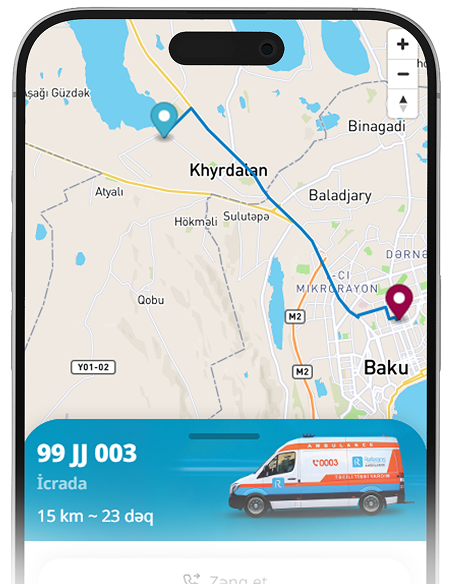
Yenilənmiş mobil tətbiqimiz hər zaman xidmətindədir.
iOS və Android əməliyyat sistemlərində mövcuddur.