

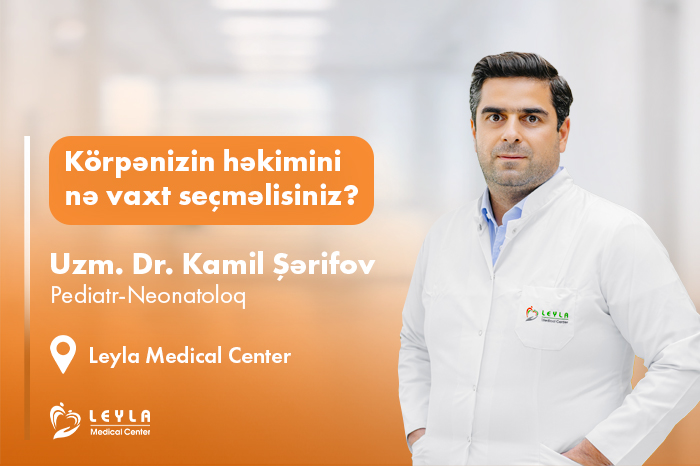
When should you choose your baby's doctor? A pediatrician explains
- A baby is born, stays in the maternity hospital for 2-3 days, and then goes home with the family. After that, we often run into a situation we regret: the baby is not examined by a pediatrician for 10-15 days, sometimes a month, or even two months.
- The family thinks: "The child is fine, sleeping and eating, so why take them to the doctor?"
- Yet the first days of life are among the periods when a baby needs the closest monitoring.
- The American Academy of Pediatrics recommends that a healthy newborn's first examination take place within the first 1-3 days after birth, or within 24-72 hours after discharge from the hospital. The World Health Organization also recommends assessing newborns at 48-72 hours, between days 7 and 14, and again afterward. There are very serious reasons for this.
- The first danger: weight loss and feeding problems
- Some weight loss after birth is a physiological process in newborns. But what matters is how much weight is lost and how well it is regained afterward.
- Sometimes a baby does not get enough breast milk, and the family does not notice. The weight loss keeps growing and the child becomes dehydrated. Excessive weight loss can even progress to hypernatremic dehydration. In severe cases, this condition can lead to neurological complications, seizures, thrombotic complications, and kidney injury.
- The most dangerous part is that such a baby does not always cry. On the contrary, they may sleep more and more. The family may interpret this as "a very calm baby."
- Yet a serious problem can hide behind this calmness.
- Jaundice: you can't say "all babies get it"
- Jaundice is very common in newborns and in most cases is physiological. However, bilirubin that was not at a dangerous level when leaving the maternity hospital can rise in the following days.
- That is exactly why the first 3-5 days of life are so important. According to the American Academy of Pediatrics, bilirubin levels in most babies can reach their peak during this period.
- If severe hyperbilirubinemia is not detected and treated in time, bilirubin can accumulate in the brain and cause bilirubin encephalopathy and kernicterus, meaning severe, lifelong neurological damage.
- For this reason, the "he has jaundice, it will pass" approach is wrong. Whether jaundice is physiological cannot be judged by eye alone. The baby's age, risk factors, feeding, and, when needed, the bilirubin level must all be considered together.
- Sleeping a lot doesn't always mean a "calm baby"
- The first signs of sepsis in newborns sometimes begin very quietly.
- The baby sleeps more than before, suckles weakly, becomes less active, and has a raised temperature or, conversely, a lowered one. Changes in color and breathing may also appear.
- When parents accept this as "it's a newborn, they sleep a lot anyway," valuable time can be lost. As the infection progresses, the child may end up in intensive care with severe sepsis, respiratory failure, and multiple organ failure.
- The World Health Organization lists worsening feeding, reduced activity, difficulty breathing, temperature changes, and seizures among the danger signs in newborns that need urgent evaluation.
- A pediatrician doesn't only treat sick children
- One of a pediatrician's main duties is to identify possible problems and prevent them before illness appears.
- During regular check-ups, the child's weight, height, and head circumference, feeding, cardiovascular and respiratory systems, neurological state, muscle tone, reflexes, signs related to vision and hearing, skeletal system, and psychomotor development are assessed consistently.
- For children who need them, appropriate laboratory and instrumental tests are planned in good time. Vitamin D and, when indicated, iron prophylaxis are started at the right time. The pediatrician also explains to the family the timely administration of vaccines, the stages of feeding, and other important matters suited to the child's age.
- In other words, the goal is not to order tests and ultrasounds at every check-up. On the contrary, a good pediatrician must correctly determine which child needs which examination, and which does not.
- Vaccines and one of parents' biggest fears
- Today, one of the claims parents encounter most often on social media is that vaccines cause autism or other neurodevelopmental problems.
- There is no reliable scientific evidence supporting this claim.
- A large Danish study published in 2025 in Annals of Internal Medicine examined 1,224,176 children. It showed that cumulative aluminum exposure from early childhood vaccines did not increase the risk of the chronic conditions studied, including autism spectrum disorder and other neurodevelopmental disorders.
- The purpose of a vaccine is not to make a healthy child ill, but to protect them before illness occurs. Preventing vaccine-preventable infections and their complications, including hospitalizations, is an important part of keeping a child healthy.
- A pediatrician doesn't just measure weight, but also guides development
- The family of a child who is monitored regularly is prepared for the next developmental stage at every check-up.
- Matters such as how to feed the baby, when and how to start complementary foods, the right approach to screen time, sleep routine, motor and speech development, and a safe home environment are discussed with the family according to the child's age.
- Looking back when the child is one or two years old, you can see a serious difference in medical history and the family's health behavior between a child monitored systematically from birth and one brought to the doctor only when sick.
- The best time to choose your child's doctor is before birth, not when they get sick
- I always give parents one piece of advice: don't look for your child's pediatrician after a problem has arisen.
- If possible, choose the doctor before the baby is born.
- The trust that develops over time between a pediatrician and a family is not just emotional comfort. The doctor knows the child from the day of birth and can follow their development, illnesses, reactions, and family more closely. Parents, in turn, know when they can wait and when they must see a doctor immediately.
- As this relationship develops, it becomes possible to avoid both unnecessary fear and unnecessary medications and tests.
- When choosing a doctor, pay attention not only to what is said on social media, but also to their education, specialty, clinical experience, scientific approach, and the professional trust earned over the years.
- Because you are not choosing a car, a phone, or clothing for your child.
- You are choosing the person you will entrust with your child's health.
- And sometimes a right decision made in the first days of life can matter greatly for the child's entire future health.
- Dr. Kamil Sharifov is head of the Pediatrics Center at Leyla Medical Center and a specialist pediatrician-neonatologist.
21 September 2026
Loading...


